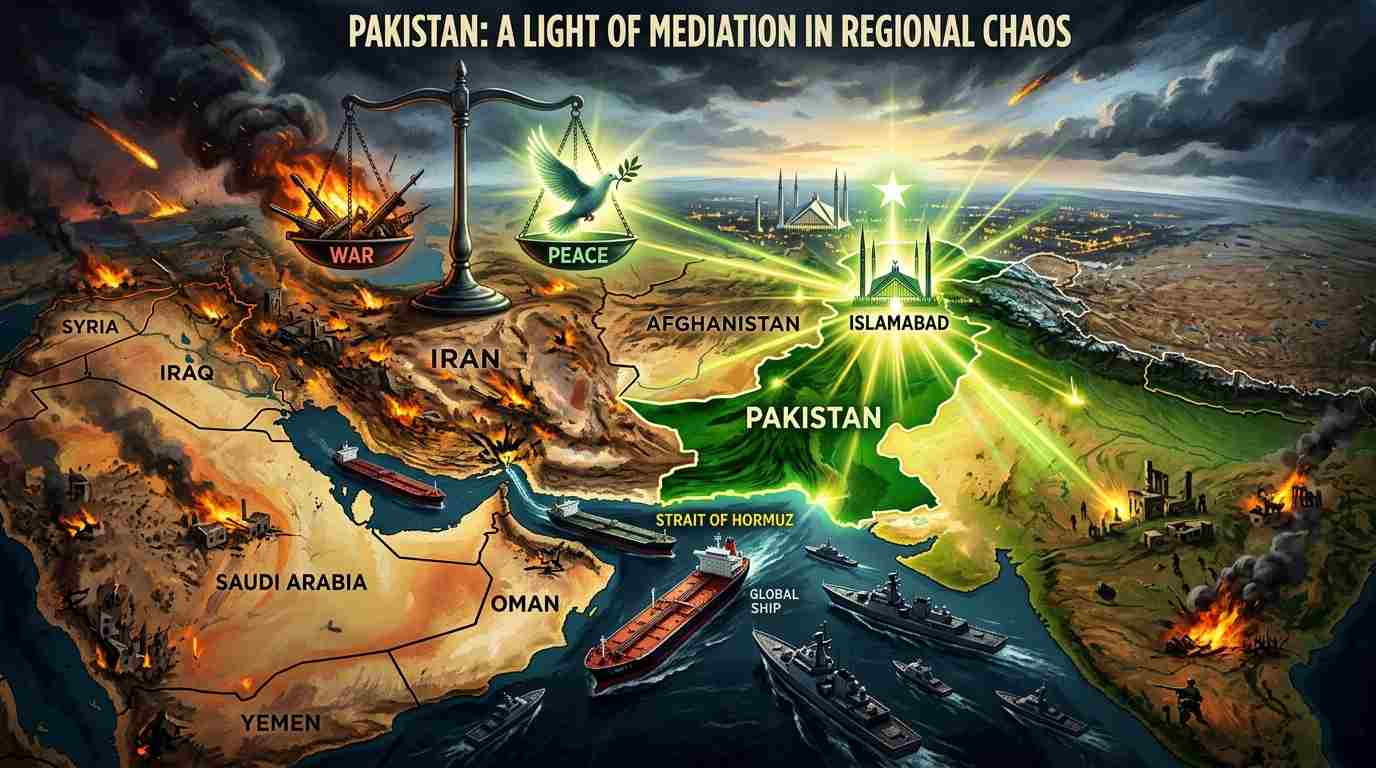
The world came closer to a major war in February 2026 than it has in decades. The United States and Israel attacked Iran. Iran closed the Strait of Hormuz – the waterway through which one-fifth of the world’s oil flows. Global markets shook. And then, in the most unlikely of places, Pakistan stepped forward and changed the course of history. This is the story of everything that happened – and the story of what might still happen in the next three days.
The Background: How Did We Get Here?
To understand what is happening today, you need to go back at least a decade. Since 2015, the international community had managed Iran’s nuclear ambitions through a deal called the JCPOA – the Joint Comprehensive Plan of Action. Under this agreement, Iran limited its uranium enrichment in exchange for sanctions relief.
In 2018, President Trump walked away from the deal, calling it inadequate. Iran, now facing crushing sanctions without any of the promised relief, gradually ramped up its nuclear program. By December 2024, the UN’s nuclear watchdog – the IAEA – reported that Iran had enriched uranium to levels approaching weapons-grade and had built up stockpiles with no credible civilian purpose. Iran was, in the words of nuclear experts, a short technical step from building a bomb.
Meanwhile, inside Iran, the largest protests since 1979 erupted in early 2026. The government’s response was brutal – thousands of civilians were killed in the crackdown. President Trump, facing pressure to respond and alarmed by the nuclear developments, authorized military action
Importantly, as recently as March 2025, US Director of National Intelligence Tulsi Gabbard told Congress that the US “continues to assess that Iran is not building a nuclear weapon.” Iran has consistently maintained that its enrichment program is for civilian energy purposes and medical research, and is a signatory to the 1970 Nuclear Non-Proliferation Treaty. The gap between US/Israeli assessments and Iran’s stated position is at the heart of why talks keep failing.
The Complete Timeline – From War to Islamabad
The two-week ceasefire runs out. No second round of negotiations has been formally confirmed. The fate of the ceasefire, the Strait of Hormuz, and regional stability hangs in the balance.
What Each Side Actually Wants – The Real Gap
The Islamabad talks collapsed after 21 hours for clear, specific reasons. Here is exactly what each side is demanding – and why the gap is so difficult to bridge.
US Demands
- Complete end to all uranium enrichment in Iran
- Dismantling of all major enrichment facilities
- Removal of Iran’s stockpile of highly enriched uranium from the country
- Full, free reopening of the Strait of Hormuz – no tolls
- End to Iran’s funding of regional armed groups (Hezbollah, Houthis)
- Restrictions on Iran’s ballistic missile program
Iran’s Demands
- End to all US-Israeli military strikes on Iran
- Right to civilian nuclear program including enrichment
- Full sanction relief from all US sanctions
- Security guarantees against future military attack
- War reparations for damage caused
- International recognition of Iranian sovereignty over the Strait
Both sides are bargaining. It’s a bazaar.– US Regional Official, commenting on the Islamabad negotiations, April 2026
Iran’s Foreign Minister Abbas Araghchi said the two sides came “within inches of an understanding” but encountered “maximalism, shifting goalposts, and blockade.” The US said Iran refused to agree to its nuclear red lines. Both sides blamed each other. Both sides insist talks are not dead.
Pakistan’s Historic Role – The World’s Most Unlikely Peacemaker
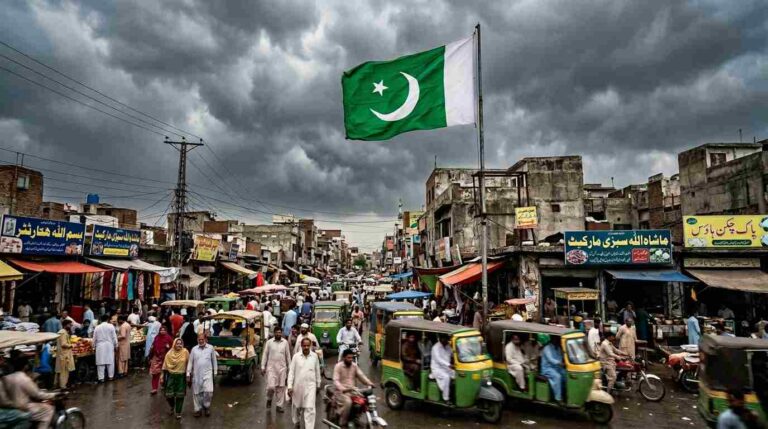
Even many Pakistanis said it was surreal that world peace was to be decided in “sleepy Islamabad.” Yet Pakistan, by having good ties with both Tehran and Washington while playing no part in the war itself, was able to bring two deeply hostile powers to the same negotiating table for the first time since 1979.
Trump explicitly credited Pakistan’s leadership: “I agreed to the ceasefire based on conversations with Prime Minister Shehbaz Sharif and Field Marshal Asim Munir of Pakistan.” Iran’s Foreign Minister Araghchi was even more effusive in his praise. Field Marshal Asim Munir has since been nominated for the Nobel Peace Prize.
Professor Ishtiaq Ahmad of Quaid-i-Azam University told Al Jazeera: “A messenger transmits, but Pakistan shaped the sequencing, timing and framing of proposals. It had leverage with all sides.” Pakistan is now positioned as a critical diplomatic bridge between the East and West — a role that could have lasting positive consequences for its global standing, and potentially for its economic relationships.
The Strait of Hormuz – Why This Waterway Controls the World
If you have heard one term repeated endlessly in this crisis, it is the Strait of Hormuz. Here is why this narrow waterway matters so much to every person on earth.
The Strait of Hormuz is a 33-kilometer-wide passage between Iran and Oman at the mouth of the Persian Gulf. In peacetime, approximately one-fifth of all global oil and liquefied natural gas passes through it daily. Saudi Arabia, Kuwait, Iraq, the UAE, and Qatar – all major oil producers – can only export through this single chokepoint.
Since the war began, Iran has largely blocked the strait, causing global shipping traffic through it to fall by 95%. The results have been immediate and global: energy prices have surged worldwide, freight costs have exploded, and Pakistan – which imports 90% of its oil from Gulf nations faces the sharpest economic pressure it has seen in years.
Iran’s coastline runs along the northern shore of the Strait. Its Revolutionary Guard Corps (IRGC) has fast attack boats, submarine capabilities, anti-ship missiles, and mines that can make the strait extraordinarily dangerous for commercial shipping. Even the US Navy – the most powerful in the world must navigate this threat carefully. Control of the Strait gives Iran its single greatest strategic leverage card in any negotiation.
What Happens Next – Three Possible Scenarios
The ceasefire expires on April 22. Here are the three scenarios that analysts and officials are watching most carefully.
Scenario 1 – A Deal Is Reached (Best Case)
Pakistani mediators successfully bridge enough gaps to bring both sides back to the table before April 22. A partial framework — not a complete deal — is agreed, the ceasefire is extended, and negotiations continue over weeks. Strait of Hormuz fully reopens. Global markets stabilize. Oil prices fall. Pakistan’s economy gets relief.
Scenario 2 – Ceasefire Extended, Talks Continue (Most Likely)
Both sides agree informally to extend the ceasefire without a formal deal. Talks continue through Pakistani, Egyptian, and Turkish channels. The world remains on edge for weeks or months. The Strait remains partially restricted. Energy prices stay elevated. Pakistan’s economic pressure continues.
Scenario 3 – Ceasefire Collapses, War Resumes (Worst Case)
Talks fail completely. Iran fully closes the Strait of Hormuz. The US carries out its threatened strikes on Iranian power plants, oil wells, and desalination facilities. Oil prices could spike above $200 per barrel. Global recession risk surges. Pakistan’s economy faces its most severe external shock in history. The region descends into wider war.
Why This Matters to Every Pakistani – Right Now
This is not a faraway war with no consequences at home. Every single one of these developments is landing directly in Pakistani households.
Your petrol price is directly connected to Strait of Hormuz disruptions. Pakistan imports its oil from Gulf nations. When that shipping route is disrupted, import costs rise, and those costs are passed to consumers at the pump.
Your electricity bill is connected to fuel oil imports that power many of Pakistan’s power plants. The energy sector circular debt — already a crisis — worsens when imported fuel costs spike.
Pakistan’s foreign reserves are being strained by higher import bills for energy, threatening the stability of the rupee and the IMF program Pakistan is currently dependent on.
Pakistani workers in the Gulf – whose remittances are a lifeline for millions of Pakistani families – face uncertainty as the regional conflict disrupts Gulf economies and employment.
And yet for the first time in living memory – Pakistan is at the center of a major global solution, not just suffering its consequences. The role Pakistan played in brokering the ceasefire is a diplomatic achievement that no government of any party has managed before. What Pakistan does with this new diplomatic capital in the coming weeks will matter enormously.
Three Days. One Deadline. The Whole World Watching.
The ceasefire expires April 22. Pakistan’s mediators are in Tehran right now. History is being written in real time.
“If talks fail and war resumes – will the world remember that Pakistan was the country that tried hardest to prevent it?”