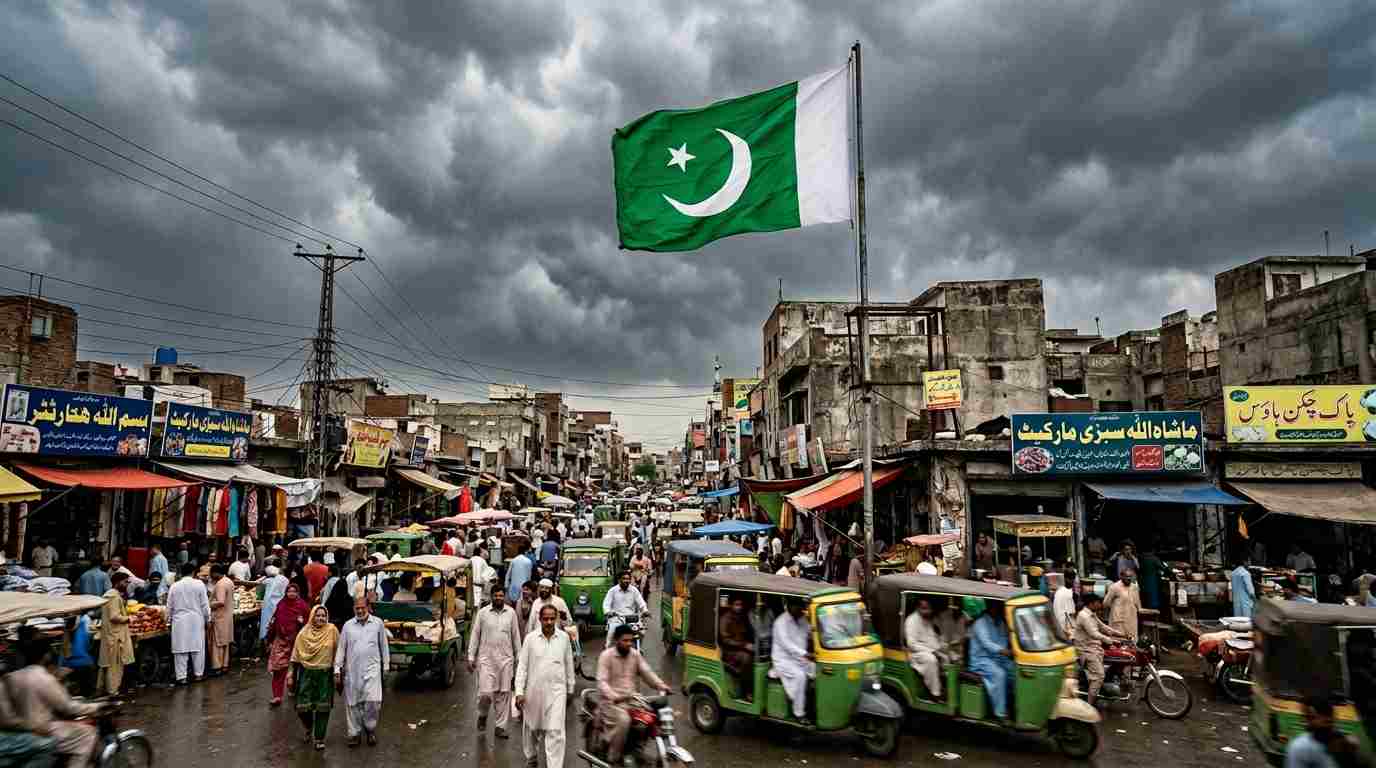
$7 billion borrowed. 25 IMF programs in history. Higher electricity bills. But also a lifeline. Here is the honest, complete picture.
Your electricity bill went up. Petrol prices did not come down. Taxes feel heavier every year. And somewhere in the news, you keep hearing about the “IMF deal” as if it is some distant arrangement between governments that has nothing to do with your daily life. It has everything to do with your daily life. This is the article that finally explains it all honestly, clearly, and without jargon.
What Is the IMF And Why Does Pakistan Keep Going Back?
The International Monetary Fund is a global financial institution based in Washington D.C., with 190 member countries. Its stated mission is to promote global economic stability primarily by lending money to countries facing financial crises in exchange for economic reforms.
Think of the IMF as a very strict bank that lends you money when no one else will but only if you agree to change how you manage your finances. The conditions it sets are called structural adjustment policies, and they are designed to make the borrowing country more financially stable over time.
Now here is the uncomfortable truth about Pakistan: this is the 25th time Pakistan has entered an IMF program since becoming a member in 1950. That is not a record to be proud of. It reflects a deep, structural pattern of governments spending more than they earn, of an economy unable to generate enough tax revenue, and of political cycles that prioritize short-term popularity over long-term reform.
Each time Pakistan exits an IMF program, the underlying problems a narrow tax base, an inefficient energy sector, an overreliance on debt remain largely intact. So, when the next crisis hits, Pakistan returns. And the cycle continues.
The 2026 Deal, A Timeline of What Happened
A 37-month bailout program approved by the IMF Executive Board. Pakistan commits to a long list of fiscal and structural reforms in exchange for phased loan disbursements.
The IMF reaches a new agreement to release $1 billion under EFF and $210 million under the Resilience and Sustainability Facility (RSF). Total disbursements now reach $4.5 billion. IMF warns that the Middle East conflict poses risks to Pakistan’s recovery.
Finance Minister Muhammad Aurangzeb meets IMF officials to discuss Pakistan’s financing strategy, including Eurobonds, Islamic sukuk, yuan-denominated debt, and a first-ever Panda bond worth $250 million. Pakistan also faces a $3.5 billion gap after the UAE did not roll over part of its support.
Pakistan formally begins considering requesting an additional $2–2.5 billion from the IMF, citing the economic fallout from the Middle East war on energy imports, inflation, exports, and remittances. Saudi Arabia steps in with an $8 billion total deposit commitment to Pakistan’s central bank.
What Pakistan Has Promised the IMF, The Real Conditions
Every IMF loan comes with conditions. These are not optional suggestions — they are binding commitments. If Pakistan fails to meet them, the IMF withholds the next tranche of money. Here is what Pakistan has agreed to in the current program:
| Condition | What It Means | |
|---|---|---|
| Primary budget surplus of 1.6% of GDP | Government must spend significantly less than it earns (before debt payments) | |
| Broader tax base via FBR reforms | Collect more taxes from more people, digital invoicing, enhanced audits | |
| Exchange rate flexibility | Government cannot artificially prop up the rupee, market determines its value | |
| Energy tariff adjustments | Electricity and gas prices must reflect actual costs, no new subsidies | |
| Inflation within 7.5% target | State Bank must keep interest rates high enough to control price rises | |
| Expand BISP coverage | More poor families to receive inflation-adjusted cash transfers | |
| Phase out agricultural MSP by June 2026 | Remove government minimum price support for crops, market to decide |
How This Deal Affects YOU The Ordinary Pakistani
This is the section that matters most. Forget the numbers and the acronyms for a moment. Here is what the IMF deal means for a person living in Lahore, Karachi, Peshawar, or any Pakistani city or village.
Real Life Example
Consider a middle-class family in Lahore. The father runs a small shop. The mother is a school teacher. They have two children. Three years ago, their electricity bill was Rs 8,000 per month. Today it is Rs 28,000 — a 250% increase. Their gas bill has similarly tripled. This is not random. This is a direct consequence of IMF conditions requiring Pakistan to remove energy subsidies and adjust tariffs to reflect actual costs. The family is now choosing between school fees and electricity bills.
Negative Impacts on Citizens
- Higher electricity and gas bills as subsidies are removed
- More taxes broader tax base means more people paying more
- Weaker rupee makes imported goods medicines, electronics, food more expensive
- High interest rates make loans and mortgages unaffordable
- Government spending cuts reduce public services
- Farmers losing minimum support price for their crops
Potential Benefits for Citizens
- Inflation declining from 23.4% peak in FY24 toward 7–8%
- More BISP cash transfers for vulnerable households
- Economic stability prevents catastrophic default
- Foreign reserves rebuilding from $9.4B to projected $13.9B
- Unlocks funding from World Bank and Asian Development Bank
- Business confidence slowly improving — jobs slowly returning
The Energy Crisis, IMF’s Most Painful Condition
Of all the IMF conditions, the energy sector reforms have caused the most pain for ordinary Pakistanis. Here is why this happened — and why it is so difficult to fix.
For decades, Pakistani governments kept electricity prices artificially low through subsidies. This was popular with voters. But it created a massive hidden problem the electricity sector accumulated what is called circular debt: an enormous pile of unpaid bills between power generators, distributors, and the government. That circular debt now stands at trillions of rupees.
The IMF’s condition is simple: raise electricity prices to cover actual costs, stop the circular debt from growing, and reform the sector. The gas sector circular debt alone stands at Rs 3,180 billion and Pakistan has a six-year plan to address just Rs 1,700 billion of it.
Pakistan’s electricity price has risen from approximately Rs 10 per unit three years ago to over Rs 65 per unit today a 550% increase making it one of the highest electricity prices in the South Asian region. This is the direct result of removing subsidies as required under successive IMF programs. The pain is real. The alternative keeping prices artificially low until the system collapses entirely would have been worse.
The New Threat: How the Middle East War Is Complicating Everything
Just as Pakistan was beginning to stabilize inflation falling, reserves rebuilding, growth recovering a new crisis arrived from outside its borders. The ongoing Middle East conflict is now threatening to derail Pakistan’s recovery in four critical ways.
First, energy costs. Pakistan imports nearly 90% of its oil from Gulf nations. Any disruption to supply routes particularly through the Strait of Hormuz could cause energy prices to spike dramatically. Fitch Ratings has specifically flagged this as Pakistan’s most serious vulnerability.
Second, remittances. Millions of Pakistanis work in Gulf countries and send money home. If regional instability disrupts employment in the Gulf, remittance flows — which are vital to Pakistan’s foreign exchange reserves — could fall significantly.
Third, exports. Pakistani goods shipped through the region face higher freight costs and longer delivery times, reducing export competitiveness at a moment when export growth is critical.
Fourth, investor confidence. Regional instability makes global investors cautious about emerging market economies in the same neighborhood. Foreign direct investment and portfolio inflows — which Pakistan desperately needs — could slow.
What Happens If Pakistan Exits or Fails the IMF Program?
This is the question that Pakistani policymakers wake up thinking about every morning. The answer is deeply uncomfortable, but every Pakistani deserves to understand it.
The IMF program is not just a source of money. It is the policy anchor that unlocks virtually all other global funding. The World Bank, the Asian Development Bank, bilateral partners like Saudi Arabia and the UAE they all look at whether Pakistan is on an IMF program before deciding to lend or invest. If Pakistan exits the IMF program or fails to meet conditions, this entire architecture of external support collapses.
Without IMF support, Pakistan would likely face: a sharp rupee devaluation, rapidly depleting foreign reserves, inability to service external debt, a potential sovereign default the first in the country’s history and a full-scale economic crisis that would make current hardships look mild. This is why, despite all the pain of IMF conditions, every Pakistani government regardless of political affiliation has ultimately complied.
Is There Hope Or Is Pakistan Trapped Forever?
This is the hardest question. And the honest answer is: it depends on decisions being made right now.
Pakistan’s fundamental problem is not the IMF. The IMF is a symptom of a deeper failure an economy that does not generate enough tax revenue to fund its own government, a bloated energy sector drowning in debt, and a political culture that rewards short-term populism over long-term reform.
The countries that have successfully exited IMF dependency South Korea, Turkey in the early 2000s, several Eastern European nations did so by making structural changes so deep that they fundamentally altered their economic DNA. They broadened their tax bases dramatically, reformed their energy sectors, grew their exports, and built manufacturing capacity that generated real jobs and real foreign exchange.
Pakistan has all the ingredients for the same transformation: a young population of 245 million, a strategic geographic location, enormous agricultural potential, and a large diaspora generating remittances. What it has lacked is sustained political will to implement painful reforms beyond the duration of each IMF program.
Fitch Ratings’ current assessment keeping Pakistan at B- with a stable outlook reflects cautious optimism. The trajectory is better than it was. Inflation has fallen from a catastrophic 23.4% peak to the 7–8% range. Reserves are rebuilding. Growth, while modest at 3.1%, is positive.
But stability is not the same as prosperity. And until Pakistan reaches the point where its own economy generates enough to fund its own government without borrowing from the IMF every few years ordinary Pakistanis will continue paying the price of these cycles in their electricity bills, their food prices, and their purchasing power.
The Question Pakistan Must Answer
Every Pakistani government has taken the IMF money. Very few have used it to build an economy that does not need it again.
“Will this generation of Pakistani leaders finally break the cycle or will our children be reading about the 30th IMF program twenty years from now?”